How to ship spare parts from Moscow to Tashkent and other cities of Uzbekistan: how to pack metal, what to choose for heavy and oversized parts and which documents a commercial shipment needs.
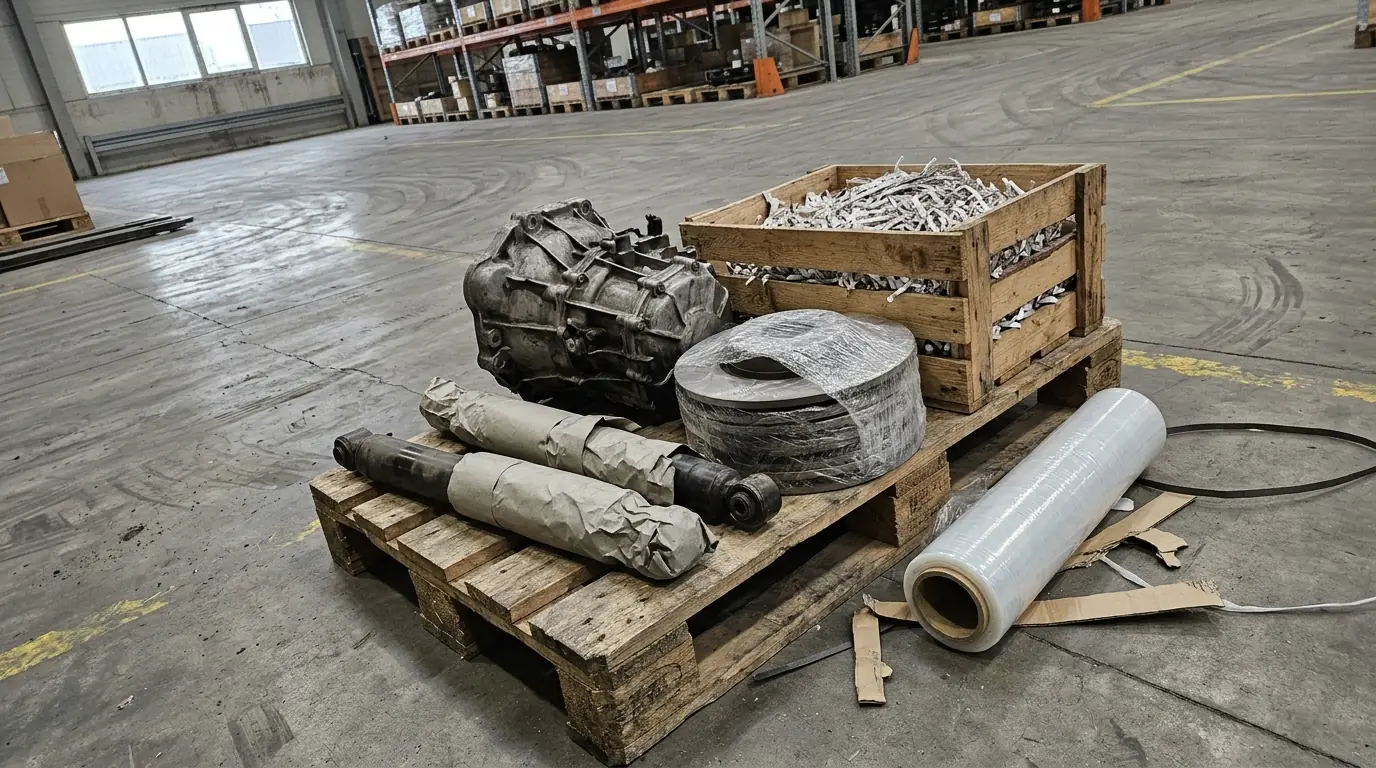
Shipping auto parts to Uzbekistan is a common task for parts stores, fleet operators and private car owners alike. The parts are heavy, metal is sensitive to moisture, and body panels take up a lot of space.
From Moscow to Tashkent, parts travel by plane, train or truck. The train and truck run in transit through Kazakhstan for several days, and during that time temperature swings can cause condensation and rust on unprotected metal.
Below is how to pack the parts, which transport to choose and what it costs, using a hypothetical example.
In short
- How to packClean, dry metal, anti-corrosion paper or film, a rigid crate or a pallet with secure fastening.
- What to chooseFor heavy shipments, the train at about 4 days or the truck at 10–15 days. The plane when a vehicle is off the road and a part is needed urgently.
- How much it costsPreliminary rates from $6 per kg by train, from $4.2 by truck and from $13.2 by plane. The logistics manager quotes the exact price after calculation.
Which auto parts are shipped to Uzbekistan and what makes them tricky
Spare parts are not one type of cargo but three. Heavy metal parts, body panels and electrical components each have different risks and need different packing.
You buy the parts from the supplier yourself: YolEx does not source or purchase parts and does not check that the order is complete. We pick up the finished shipment from the seller or from you in Moscow, pack it and deliver it to the recipient in Uzbekistan.
Choose a type of part.
Brake rotors and drums, leaf springs, shafts, suspension and engine parts. Heavy and dense: the price is based on actual weight.
The main risk is corrosion from moisture and condensation. The takeaway: anti-corrosion packing and a crate or pallet.
Bumpers, hoods, doors, fenders, glass. Light for their size: the cost may be based on volumetric weight.
The main risk is chips, dents and scratches on painted surfaces. The takeaway: a rigid frame, corner protectors and soft padding.
Headlights, control units, sensors, as well as batteries and automotive fluids.
The main risks are impacts and special shipping rules: batteries and fluids are not always accepted, especially by plane. The takeaway: describe the cargo to the logistics manager before shipping.
If a shipment mixes different parts, heavy items go at the bottom, and fragile electrical parts and lights are packed separately in boxes with filler.
Before shipping, check the parts against the supplier's invoice: part numbers, quantities and the completeness of assemblies. If it later turns out that the box contains the wrong part, an exchange will mean another trip from Moscow to Tashkent and back.
For complex cargo, such as complete engines, axles and large body panels, send the logistics manager photos and dimensions in advance. That makes it easier to choose the packing and transport, and the quote will be more accurate.
How to pack spare parts so the metal doesn't rust in transit
Rust comes not from rain but from condensation: cold metal in a warm room gets covered in moisture. The longer the journey and the bigger the temperature swings, the higher the risk.
Moscow — Tashkent transit times: YolEx data, November 2026. General risk assessment for unprotected metal.
- Plane, 10–24 hoursA short journey, few temperature swings
- Train, about 4 daysSeveral days in a railcar, cold in winter
- Truck in winter, 10–15 daysA long time in an unheated trailer, protection is a must
The takeaway: for the train and truck, anti-corrosion packing is always needed, especially from fall through spring.
How to pack metal parts:
- Clean and dry the parts: moisture under the packing is more dangerous than outside it.
- Wrap them in anti-corrosion paper or film with a corrosion inhibitor.
- Place heavy items in a wooden crate or on a pallet, and fill empty spaces with filler.
- Secure the parts so they don't knock against each other, and wrap the pallet in stretch film.
- Number the pieces and attach a list of parts.
That is how we packed the shipment in the case study of auto parts from Moscow to Samarkand by train in 4 days: brake rotors and filters were wrapped in anti-corrosion paper and packed in a wooden crate, and the parts arrived free of corrosion.
Train, truck or plane: how to ship spare parts to Tashkent
For most auto parts shipments, the choice is between the train and the truck. The plane makes sense when a vehicle sitting idle costs more than the delivery.
| Transport | Transit time Moscow — Tashkent | Rate from | When it fits |
|---|---|---|---|
| Plane | 10–24 hours, express from 10 hours | $13.2/kg | An urgent part for a vehicle in the shop; lightweight electronics |
| Train | About 4 days | $6/kg | Shipments for a store, heavy parts, delivery to Samarkand |
| Truck | 10–15 days | $4.2/kg | Large palletized shipments, oversized body parts |
← Swipe to scroll the table →
The rates are preliminary, YolEx data as of November 2026. The truck is most cost-effective for large volumes, and the train when the shipment is heavy but can't wait two weeks.
A truck example is the case study of 550 kg of truck parts delivered to Tashkent in 9 days: brake drums and leaf springs were stacked on pallets, wrapped in film and strapped down. For more on the train, see our article on rail freight to Uzbekistan.
How much shipping spare parts from Moscow costs: a hypothetical example
Dense metal parts are charged by actual weight, while large body parts are often charged by volumetric weight. That is why both weight and dimensions are needed for a quote.
Hypothetical example based on preliminary YolEx "from" rates, November 2026. Excluding packing, insurance and door-to-door delivery.
The math: 150 × $13.2 = $1,980, 150 × $6 = $900, 150 × $4.2 = $630. The takeaway: the train costs less than half as much as the plane, and the truck is cheaper still, but takes longer.
Bumpers and hoods are a different story: a light but long part takes up a lot of space in the vehicle, and shipping it may cost more than a heavy rotor. The shipping cost calculator will show a preliminary price, and the logistics manager will quote the exact one.
Which documents an auto parts shipment needs
Parts for your own car and a shipment for a store are processed differently. A commercial shipment needs documents that confirm the transaction and the contents of the cargo.
What to prepare for a commercial shipment:
- A bill or invoice from the supplier with the names and value of the parts.
- A supply contract between the seller and the buyer in Uzbekistan.
- A packing list with the number of pieces, the weight and a list of the parts in each piece, ideally with catalog numbers.
- Certificates of conformity, if the law requires them for your category of parts.
For a personal shipment, a packing list with approximate values and the recipient's details are enough. Import allowances and duties are set by the laws of Uzbekistan, and they change; check the current terms with the logistics manager or the customs service.
An exact list of parts in the documents speeds up clearance: it is easier for the inspector to check the cargo when the item names match the labels on the boxes.
How to ship spare parts to Tashkent with YolEx
The sender doesn't need to haul heavy parts to the warehouse: they will be picked up from the supplier or from you in Moscow and delivered to the recipient in Uzbekistan.
How the shipment works:
- Request. In the calculator, enter the weight, dimensions, type of parts and the recipient's city. If you are not sure which transport to choose, select "Suggest the best option."
- Quote. The logistics manager suggests an option to fit your timeline and budget, and gives you the cost and the list of documents.
- Pickup. The shipment is picked up at the supplier's address or your address in Moscow, or you can bring it to the warehouse yourself.
- Packing. If needed, the parts are packed against corrosion, stacked on pallets and the pieces are labeled.
- Transport. The cargo travels by plane, train or truck; on request, we send a photo report from loading.
- Delivery. The parts are delivered to the recipient's door in Tashkent or in another city of Uzbekistan.
For expensive assemblies such as engines, gearboxes and control units, it makes sense to take out cargo insurance. If the shipment consists of parts from different suppliers, they can be consolidated at the warehouse in Moscow and sent as one shipment.
Important
The transit times and rates in this article are preliminary and valid as of the update date. They depend on the weight and volume of the shipment, the type of parts, the shipping date, customs clearance and the weather. The logistics manager confirms the exact terms when calculating the cost.