We explain how consolidated cargo delivery from Moscow to Tashkent works, who it pays off for, what determines the departure date and how to prepare your boxes so they travel together and arrive intact.
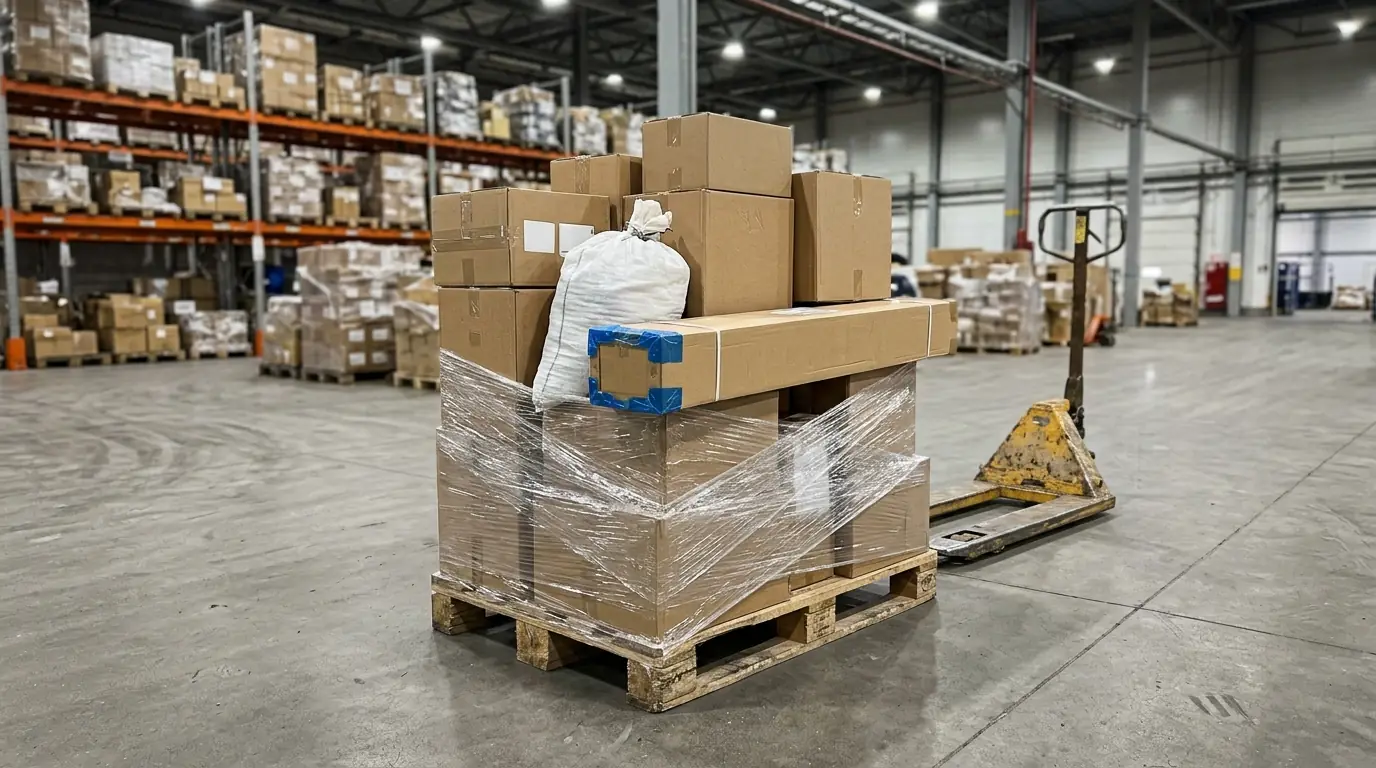
Consolidated cargo is a shipment in which cargo from different senders travels in one vehicle. You pay only for your own kilograms and volume, not for the whole truck, railcar or space on board a plane.
On the Moscow to Tashkent route, consolidated cargo travels by all three types of transport. Trains and trucks travel in transit through Kazakhstan: by train a shipment takes about 4 days, by truck 10–15 days, and by plane it arrives in 10–24 hours.
Below we cover how consolidation works, when it's cheaper than a dedicated truck and what a sender should do so their packages don't get lost among other people's cargo.
In short
- What consolidated cargo isCargo from several senders in one vehicle. Each pays for their own weight and volume.
- Who benefitsAnyone with a shipment ranging from one box to several pallets: small businesses, purchasing agents, private senders.
- How much it costsRussia ↔ Uzbekistan estimated rates from $4.2/kg by truck, from $6 by train and from $13.2 by plane. A logistics manager gives you the exact price after calculating it.
How consolidated cargo works: a box's journey from Moscow to Tashkent
Consolidation means combining small shipments into one large shipment. The logistics company fills the vehicle completely, and each sender pays only for their share.
Senders bring their cargo to the warehouse or order pickup from their address. At the warehouse, packages are received, weighed, labeled and combined into a shared shipment by destination. Once the shipment is assembled, it's loaded onto a truck, railcar or plane.
- SenderPickup from your address or drop-off at the warehouse
- Moscow warehouseIntake, weighing, labeling
- In transitTrain or truck via Kazakhstan, plane direct
- Tashkent warehouseShipment sorted by recipient
- RecipientPickup at the warehouse or delivery to the address
At the destination, the shipment is broken down: each package is checked against its label and handed over to its recipient. One combined shipment turns back into dozens of separate ones.
The main difference from a dedicated truck is that you share the vehicle with other cargo. So the sender needs to pay closer attention to two things: packing that can withstand neighboring cargo and reloading, and labeling that makes it easy to identify the package when the shipment is sorted.
Who benefits from consolidated cargo delivery
Consolidated cargo pays off when a shipment is too small for a whole truck but too large or valuable for a regular postal parcel.
Who most often sends consolidated cargo to Uzbekistan:
- Small businesses. Regular deliveries of a few boxes or pallets without paying for a whole truck.
- Purchasing agents. Goods from several suppliers in Moscow are gathered at the warehouse and sent to Tashkent as one shipment.
- Manufacturers and service companies. Spare parts, samples and consumables needed in small batches but on a regular basis.
- Private senders. Moves, large gifts, home appliances for relatives.
Consolidated cargo isn't always the right fit. If a shipment fills almost the entire trailer, a dedicated truck is cheaper: it leaves on the day of loading and doesn't wait for other senders. And for a single envelope of documents, express air delivery is more convenient.
To figure out which option suits your shipment, compare the three main methods on the Moscow to Tashkent route.
| Option | When it fits | How the price is calculated | Moscow to Tashkent transit time |
|---|---|---|---|
| Consolidated cargo | From one box to several pallets | For your own kilograms and volume | Time to assemble the shipment plus the journey: 10–24 hours by plane, about 4 days by train, 10–15 days by truck |
| Dedicated truck | Heavy and large shipments that fill the entire trailer | For the whole vehicle, even if the trailer isn't completely full | 10–15 days, departure without waiting for other cargo |
| Postal parcel | Small items when timing doesn't matter | At the postal operator's rates | Depends on the type of shipment; there are weight and size limits |
← Swipe to scroll the table →
Consolidated shipping also works when one client's cargo is going to different countries. For example, we simultaneously sent two commercial shipments, 211 and 205 kg, to recipients in Kazakhstan and Uzbekistan: we packed them separately and marked them with different colored corner protectors. Details are in the case study on two shipments to two countries in 10 days.
Transit times and cost of consolidated cargo from Moscow to Tashkent
The transit time of consolidated cargo has two parts: waiting for the shipment to be assembled and the time in transit.
The time in transit on the Russia ↔ Uzbekistan route is known in advance. The assembly time depends on how busy the route is and the day you dropped off your cargo, so a logistics manager gives the next departure date when calculating the quote.
To avoid losing time, drop off your cargo early and with a ready description of the contents. The shipment leaves once all packages are at the warehouse and the documents are complete, and a box without an inventory can hold up not only itself but the entire shipment.
Estimated starting rates, Russia ↔ Uzbekistan. YolEx data, November 2026.
A kilogram by plane costs more than three times as much as by truck. For consolidated cargo that isn't urgent, the train or truck is the usual choice, while the plane is reserved for urgent and valuable packages.
Hypothetical example: three 15 kg boxes, 45 kg in total. By train, shipping would cost from $270 (45 × $6), by truck from $189 (45 × $4.2), by plane from $594 (45 × $13.2). Packing, insurance and door-to-door delivery are charged separately.
For light but bulky boxes, the price may be based on volumetric weight, a calculated weight based on the package dimensions. So in your request, give not only the weight but also the dimensions of each box. The delivery cost calculator will show an estimate.
How to pack and label packages in a consolidated shipment
In a consolidated shipment, your box sits next to other people's cargo and goes through several reloadings. The packing must withstand pressure from above, and the label must show at a glance whose package it is.
- Sturdy boxRigid corrugated cardboard without old labels or barcodes
- No empty spacesFiller inside so items don't shift during reloading
- Package numberA note like “1 of 3” on each box shows that the shipment is complete
- Recipient detailsName, phone and city on every package, not just one
- One unitSeveral packages from one sender can be stacked on a pallet and wrapped in film
- FragileA mark on the box and a heads-up to the logistics manager in advance
If there are many packages, they're stacked on a pallet and wrapped in stretch film: this way the shipment travels as one unit and doesn't fall apart during reloading. YolEx repacks cargo at the warehouse if needed and, on request, sends a photo report showing what condition the packages were in when shipped.
Consider the season. In winter, trains and trucks spend several days traveling through Kazakhstan, so liquids or devices sensitive to cold should be discussed with a logistics manager in advance. Learn more about materials and protecting fragile items in the article on how to pack cargo for shipping.
How to send consolidated cargo to Tashkent with YolEx
All the sender needs to do is describe the cargo and give the addresses: the logistics manager takes care of pickup, warehouse intake, paperwork and delivery.
Click a step to see the details.
Request
Enter the route, weight, dimensions and number of packages in the calculator. If you don't know which transport to choose, select “Suggest the best option”.
Quote
The logistics manager gives you the rate, the next shipment departure date and the documents your cargo will need.
Pickup or warehouse drop-off
A courier picks up the packages from your address in Moscow, or you bring them to the warehouse yourself.
Intake and labeling
The packages are weighed and labeled, and repacked if needed. A photo report is available on request.
Transportation and customs
The shipment travels by the chosen transport; the logistics manager helps with customs clearance and keeps you updated.
Delivery
In Tashkent, the packages are released to the recipient at the warehouse or delivered to their address, including to other cities in Uzbekistan.
The documents depend on the cargo. For personal belongings, an inventory of contents with approximate values is usually needed; for a commercial shipment, documents for the goods. Customs rules are set by law, and they change: check the current conditions for your shipment with a logistics manager.
Important
Consolidated cargo doesn't leave the moment you drop it off but once the shipment is assembled. If your deadline is firm, say so in your request: a logistics manager will suggest a departure that meets your date or an express option. The transit times and rates in this article are estimates and depend on the cargo, the shipping date, customs clearance and the weather.